







PROCEDURES | Cracked Teeth


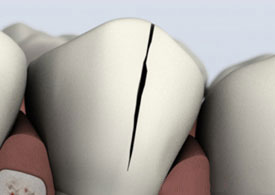
Cracked teeth demonstrate many types of symptoms, including pain when chewing, temperature sensitivities, or pain with biting pressure. It is also common for pain to come and go, making it difficult to diagnose the cause of discomfort.

Chewing can cause movement of the cracked pieces of your tooth, and the pulp within the tooth becomes irritated. At the same time, when biting pressure is released, the crack can close quickly, resulting in sharp pain. Eventually, the pulp will become damaged and tooth will consistently hurt, even when you are not chewing. It is possible that cracks can lead to infection of the pulp tissue, which can spread to the bone and gum surrounding the problematic tooth.

Types of Cracks
Craze lines

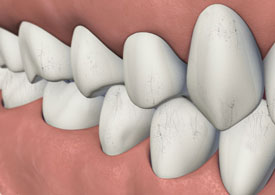
These are tiny cracks that only affect the outer enamel of the tooth. These cracks are more common in adults. These types of cracks are superficial and are usually of no concern.
Fractured Cusp

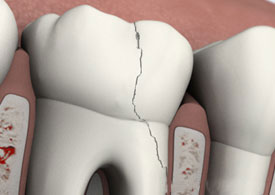
When a cusp becomes weakened, a fracture may result. The cusp may break off or be removed by a dentist. A fractured cusp may not damage the pulp severely, and root canal is not always necessary. Determination of the need for root canal therapy will depend on symptoms present and the result of tests performed by your dentist or here at our office. A fractured tooth does benefit greatly from the placement of a crown to protect the remaining tooth structure.

Cracked Tooth

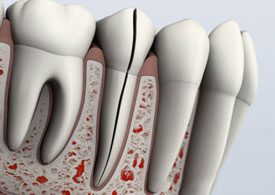
This type of crack extends from the chewing surface of the tooth and vertically migrates towards the root. In some cases, the crack may extend below the gum line. It is possible for the crack to extend further into the root. Damage to the pulp is commonplace. In this case, root canal treatment is usually necessary. A cracked tooth that is not treated will worsen, resulting in the loss of the tooth. Therefore, early detection and treatment are essential.

Split Tooth

A split tooth is usually the result of an untreated cracked tooth. It can be identified by a crack with distinct segments. This type of tooth can never be saved intact. Yet, the position and extent of the problem will dictate whether any portion of the tooth can be saved. Sometimes, endodontic treatment by the doctors and restoration by your dentist can be used to save a portion of the tooth.
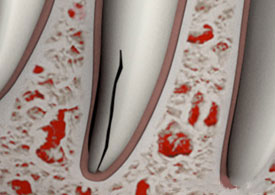
Vertical Root Fracture

A vertical root fracture begins at the root and extends towards the chewing surface of the tooth. Unfortunately, they show minimal symptoms and may go unnoticed. Treatment involves endodontic surgery if a portion of the tooth can be saved by removal of the fractured root. Otherwise the tooth will have to be extracted.


Traumatic Injuries


Dislodged Teeth

Injuries to the mouth can cause teeth to be pushed back into their sockets. Your endodontist or general dentist may reposition and stabilize your tooth. Root canal treatment is usually started within a few weeks of the injury and a medication, such as calcium hydroxide, will be placed inside the tooth. Eventually, a permanent root canal filling will be implanted.

Sometimes a tooth may be pushed partially out of the socket. Again, your endodontist or general dentist may reposition and stabilize your tooth. If the pulp remains healthy, then no other treatment is necessary. Yet, if the pulp becomes damaged or infected, root canal treatment will be required.


Avulsed Teeth

If an injury causes a tooth to be completely knocked out of your mouth, it is important that you are treated immediately! If this happens to you, keep the tooth moist. If possible, put it back into the socket. A tooth can be saved if it remains moist. You can even put the tooth in milk or a glass of water (add a pinch of salt.) Your Endodontist may start root canal treatment based upon the stage of root development. The length of time the tooth was out of your mouth and the way the tooth was stored, may influence the type of treatment you receive.

IMPORTANT: Traumatized teeth can develop problems for considerable periods of time after the traumatic event. It is important to have your dentist or endodontist follow the tooth for at least one year at regular intervals. This typically will involve an x-ray of the effected teeth and a short examination.

Injuries in children

An injured immature tooth may need one of the following procedures to improve the chances of saving the tooth:

Apexogenesis

This procedure encourages the root to continue development as the pulp is healed. Soft tissue is covered with medication to encourage growth. The tip of the root (apex) will continue to close as the child gets older. In turn, the walls of the root canal will thicken. If the pulp heals, no additional treatment will be necessary. The more mature the root becomes, the better the chance to save the tooth.

Apexification

In this case, the unhealthy pulp is removed. The Doctors place medication into the root to help a hard tissue form near the root tip. This hardened tissue provides a barrier for the root canal filling. At this point, the root canal walls will not continue to develop, making the tooth susceptible to fractures. It is important to have the tooth properly restored by your dentist.


Home | Meet Us | Patient Info | Procedures | Online Registration
Locations | Referring Doctors | Site Map

Dr. James S. Allen is an endodontist whose practice is located in St. Joseph, Michigan, in a modern, state of the art facility, which allows full utilization of the latest technology available in Endodontics today. His practice, Southwest Michigan Endodontics, is dedicated to providing excellent dental treatments and offering procedures such as root canals, apicoectomy, and endodontic retreatment.

Website Design by PBHS Inc.